How to (safely) dilute essential oils
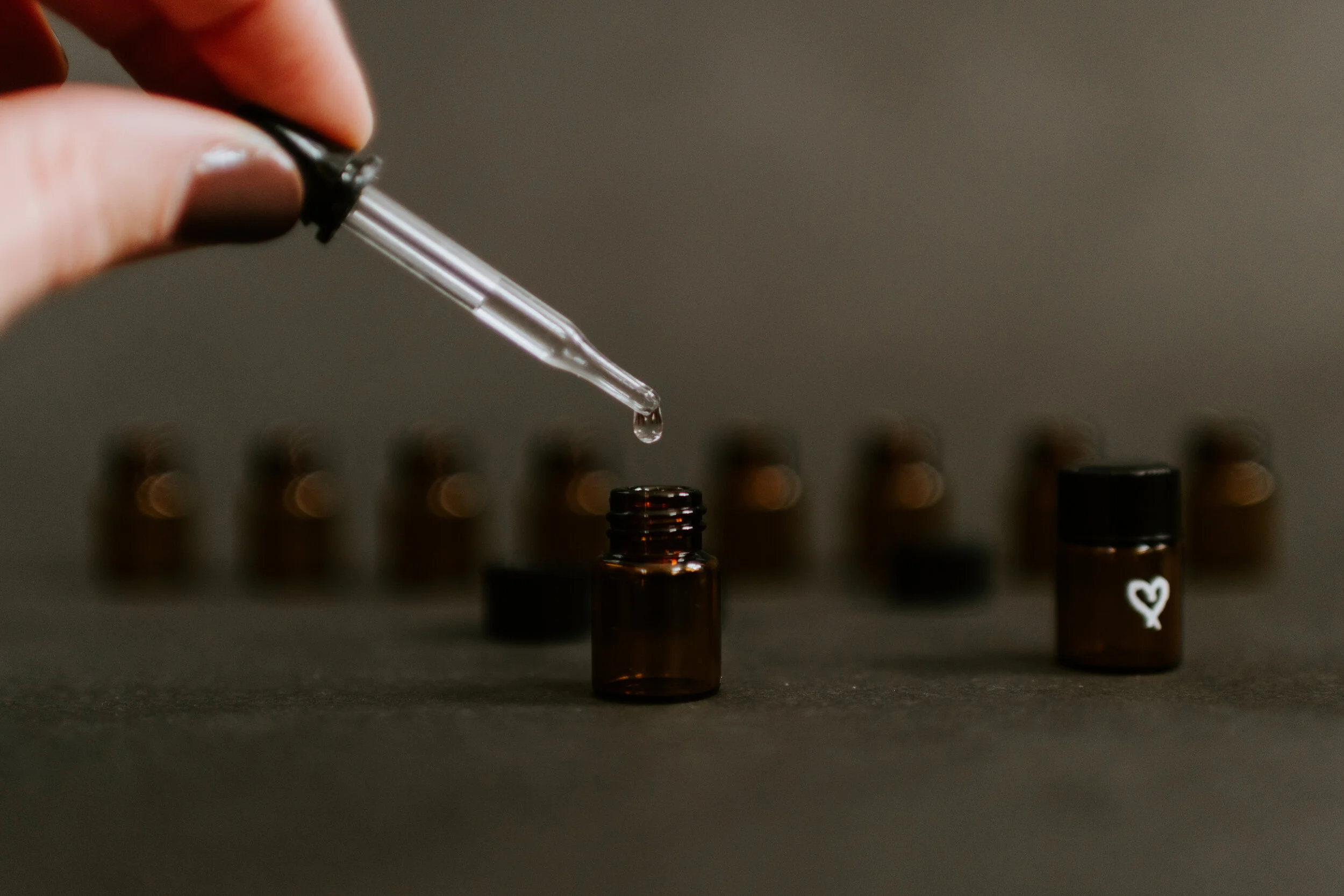
How many drops should I put in my blend?
Honestly? It's one of the questions I get asked most. Usually by women who've started reaching for lavender at bedtime, or mixing up a little roller blend for when everything feels a bit much. And I love that instinct - scent is one of the fastest, gentlest ways to tell a frazzled nervous system it's safe to switch off.
Quick note on why I'm the one telling you this, before you wonder: blending is actually where I started. I trained in aromatherapy reflexology (AromaReflex) alongside my reflexology qualifications, so safe blending isn't a side hobby - it's something I was taught properly.
Right - here's the bit that gets lost in all the natural-wellness excitement: essential oils are powerful. They're highly concentrated plant compounds, and "natural" really doesn't mean "harmless." So before you go blending, let's get the safety right. Used well, these oils are a gorgeous support for stress, sleep and a calmer home. Used carelessly, they can genuinely do more harm than good.
Why do I need to dilute?
Respect
My first approach to essential oils, and to aromatherapy, is to respect the plants. So much work goes into planting, growing, harvesting and producing these precious concentrated oils — it's really unnecessary to use loads of drops. Diluting shows consideration for the plant, for the process, and for the sustainability of the natural resource it offers us.
Skincare
High dosages and neat topical application can cause negative skin or health reactions. Using essential oils undiluted, or at too high a dilution, can lead to skin irritation, sensitisation, and in some cases allergic reactions (though that's quite rare).
Age and health
For children, pregnant women, the elderly, or anyone with a particular health condition, you'll want to go lower. Their bodies are more sensitive, and the gentler you go, the lighter the load you're putting on them.
Less is more
Less really can mean more. Using more essential oil doesn't pack in more benefits or make a more powerful blend. It may actually increase your risk of skin sensitisation and irritation, and bring on other effects like headaches or nausea.
Base products
Natural base oils and butters are wonderfully nourishing and moisturising. I'll repeat for effect - essential oils can react with and irritate the skin, so it's important to blend them into a base. Essential oils are fat soluble, meaning they only dissolve in fats, so we blend with fats: jojoba, grapeseed and sweet almond oil are all great options, and for something more solid you can use coconut oil or butters like cocoa and shea.
A few safety habits worth making non-negotiable:
Patch test any new blend - a little on the inner forearm, then wait 24 hours.
Never take essential oils internally.
Check each oil's own guidance. This is a general dilution guide, but some oils have specific rules - certain ones call for very low dilutions or a maximum dermal use of 2%, some (like bergamot) are phototoxic, and others should be avoided in pregnancy.
Below i’ve made a super easy table of dilutions from 1 - 3%.

On the far left column you'll see the measurements (10, 20, 30ml…) - this is your base oil. The drops in the three right-hand columns show the amount of essential oil needed for that amount of base, depending on the dilution you've chosen. Are you still with me?
1%
For children (over five), pregnant women and the elderly. Also the right place to start for anyone sensitive to fragrance, prone to headaches from aromas, with sensitive skin, or when making something for the face.
2%
Your everyday workhorse - for massage, body blends and general skincare (drop to 1% for the face). It's the one most people reach for day to day, for both the physical stuff and the emotional.
3%
For blending to support yourself through a particular symptom, or an acute problem — for example menstrual cramps, colds, coughs, sinusitis or pain relief.
Which oils I reach for when life feels loud
A few that the women in my clinic come back to again and again - for winding down, for the wired-but-tired evenings, for that 3am-wake season of life:
Lavender - the classic, for good reason. Calming and gentle enough for most.
Roman chamomile - soft and soothing; lovely in a bedtime blend.
Bergamot - uplifting on heavy days (but it's phototoxic, so keep it off skin that'll see sunlight for the next 12 hours or so).
Frankincense - grounding when your head won't quieten.
Clary sage - often reached for in the perimenopause years (but skip it in pregnancy).
One honest reminder, though: a beautiful blend is support, not treatment. It works best alongside the bigger picture: rest, the right medical care, and tending to the nervous system underneath it all. If the wired, can't-switch-off, awake-at-3am feeling has become your normal, that's exactly what I help with — through Reflexology for Stress & Anxiety and Reflexology for Hormones & Perimenopause. And if 3am is your particular nemesis, I've written about exactly why that happens here.
Want more of this?
If you like the quiet, sensible end of wellness - no shouty rants, no filtered reels, just honest help with feeling like yourself again - come and join The Off Switch: my free 5-day email series of DIY self-reflexology for women who are tired of being wired. Sign up here →