Reflexology for Sleep: Help for the 3am Wake
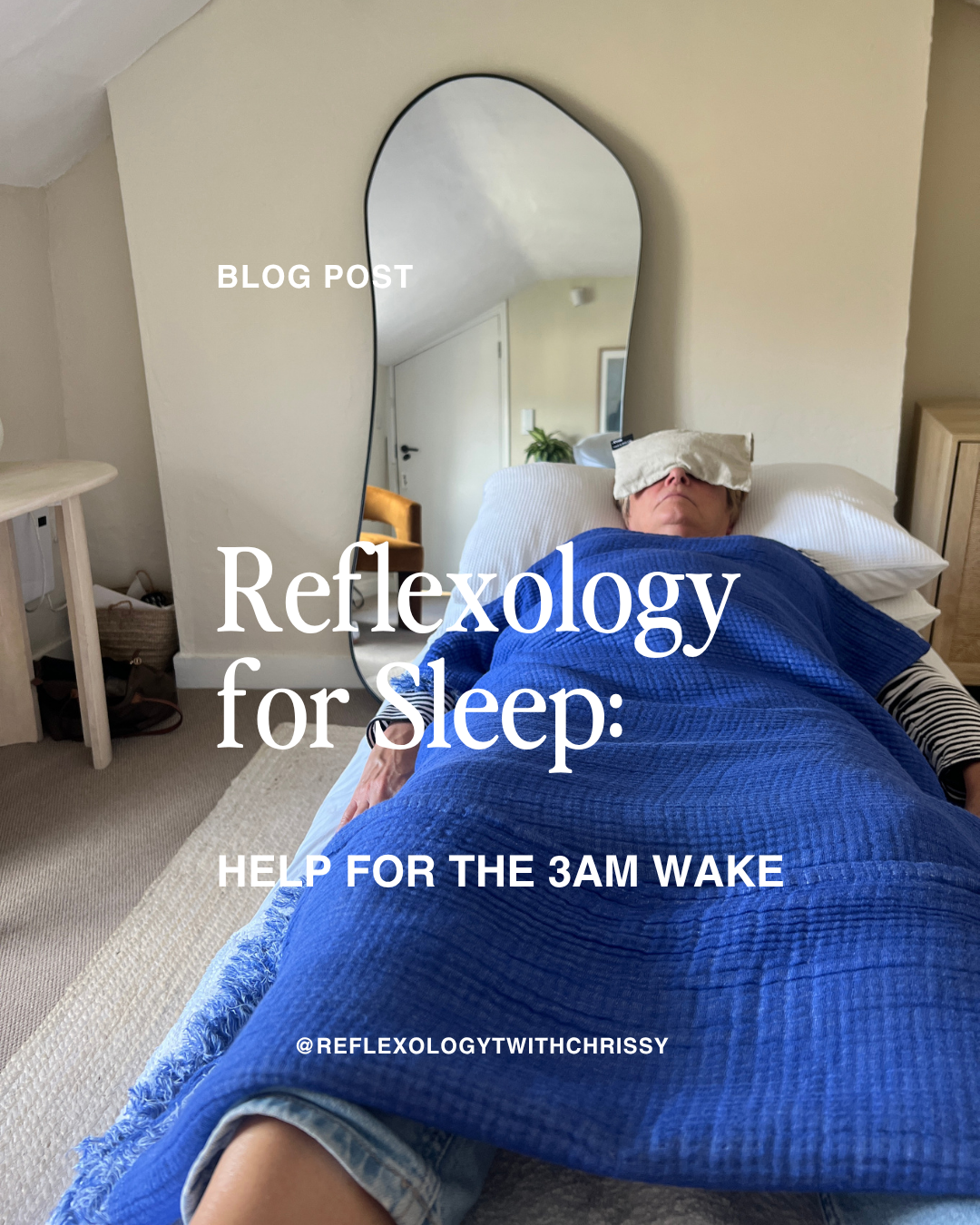
Reflexology for sleep: help for the 3am wake
If you've found this page, I'd put money on how your night went.
You fell asleep fine. Then at some point - usually around 3am - you were wide awake. Not groggy-awake. Properly awake, as if someone had flipped a switch. Heart going, brain suddenly very interested in everything you didn't finish today, body too hot and then too cold.
First things first: you're not broken, and you're not doing anything wrong.
That 3am wake is one of the most common things women tell me about, especially through perimenopause. And the good news is it's exactly the kind of thing reflexology can help with - which is probably why you're here, looking for someone who can actually do something about it.
So let me tell you, plainly, how I can help.
Why you keep waking at 3am
The short version: your nervous system hasn't switched off - and there's a hormone sitting right in the middle of it called cortisol.
Cortisol has a bad reputation as "the stress hormone," but it isn't the villain here. It's also your body's built-in alarm clock. It's meant to sit low and quiet through the night, then rise gently in the early hours so that by morning you surface naturally - alert and ready for the day. That neat little curve is part of your circadian rhythm, and when it's working properly you barely notice it.
The trouble is the kind of life most of us have quietly accepted as normal. Low-level, always-on stress - the mental load, the endless to-do list, the phone, the constant bracing for the next thing - signals your adrenal glands to secrete adrenaline and cortisol. These keep you alive and alert in a crisis (an accident or famine) but they’re not designed to be simmering away chronically everyday…
So instead of staying politely low overnight, cortisol starts climbing too early. Around 3am, your alarm clock goes off hours before it's supposed to, and you wake up wired, as though it were already morning. That's the thudding heart and the wide-awake brain at a time you'd give anything to be asleep.
Add perimenopause on top - as progesterone, which has a naturally calming, sedative effect, begins to dip - and your system becomes even quicker to react and slower to soothe. 3am turns into a standing appointment you never asked for.
None of this means something is wrong with you. It means your body has been running in "on" mode for so long that it's half-forgotten how to drop fully into "off."
What reflexology actually does for sleep
Reflexology won't knock you out like a pill, and I'd never claim it cures insomnia. What it does is gentler and, for a lot of women, more lasting: it helps coax your nervous system out of that permanently-switched-on state - the very state that keeps cortisol simmering and back towards rest.
In a treatment, the focus is on helping your body shift out of "fight or flight" and into the calmer, rest-and-digest mode where good sleep actually happens. Most clients feel it within the session - that heavy, slumber feeling - and many tell me the real difference shows up over the following nights: falling asleep more easily, and, the one everyone wants, staying asleep through the small hours.
Think of it less as a sleeping tablet and more as teaching an over-revving engine how to idle again.
What to expect when you work with me
You don't need to do anything except turn up and lie down. You stay fully clothed, warm and covered, and I work on your feet (from my clinics in Montpellier, Cheltenham and Bourton-on-the-Water). Most people are somewhere between deeply relaxed and fully asleep within minutes - which, if sleep is the thing you've come for, is rather the point.
For something that's been building for months, one treatment is a lovely reset, but a short series tends to give the nervous system the consistency it needs to properly relearn how to switch off. We can talk through what's right for you when you book.
If sleep is part of a bigger picture
For a lot of women, the 3am wake doesn't arrive alone - it comes with the hot flushes, the brain fog, the illogical sense of dread. If that's you, the question of whether to look at HRT alongside everything else is worth having too. I've written honestly about my own take on that here.
Reflexology sits happily alongside that bigger picture - supporting your nervous system and your sleep while the rest is sorted with your GP. It works with your care, never instead of it.
Ready for a proper night's sleep?
If you're tired of meeting 3am, let's do something about it.
Not local to Cheltenham? I made something for you: The Off Switch - 5 days of DIY foot reflexology recordings you can do at home.
Disclosure: Reflexology supports relaxation and wellbeing and can help with sleep by encouraging the body to rest but it isn't a treatment or cure for insomnia or any medical condition. If poor sleep is persistent or affecting your health, please also speak to your GP.