Vagus Nerve Reflexology: The Points That Calm Your Nervous System (And How to Use Them at Home)

If you've landed here, you've probably already done all the reading. You know the vagus nerve is the long wandering nerve that runs from the base of your skull all the way down through your throat, chest and gut. You know it's the main switchboard for your parasympathetic nervous system - the rest-and-digest response that calms you down after stress. And you've probably read that reflexology can help stimulate it.
What you haven't easily found, until now, is the practical bit. Where exactly do you press? On the foot or the hand? How hard? How long? And does it actually work outside a treatment room?
This is the guide I wish existed when clients first started asking me these questions.
A quick honesty note before we start: reflexology doesn't directly touch the vagus nerve - the vagus runs through your torso, not your feet or hands. What it does is work on reflex points that map onto the nervous system and the organs the vagus innervates. The result, when those points are worked well, is a measurable shift into parasympathetic dominance. Your heart rate slows. Your breath deepens. Your digestion wakes up. Your nervous system, in other words, gets the message that it's safe to stand down.
Here's how to send that message yourself.
The main four reflex points for boosting vagal tone
There are dozens of reflex points across the feet and hands, but for vagus nerve and nervous system regulation specifically, these are the four I come back to again and again in my clinic.
A quick note on language: these “reflex points” are what most people mean when they search for vagus nerve "pressure points" - same thing, just the reflexology term for them.
1. The solar plexus reflex
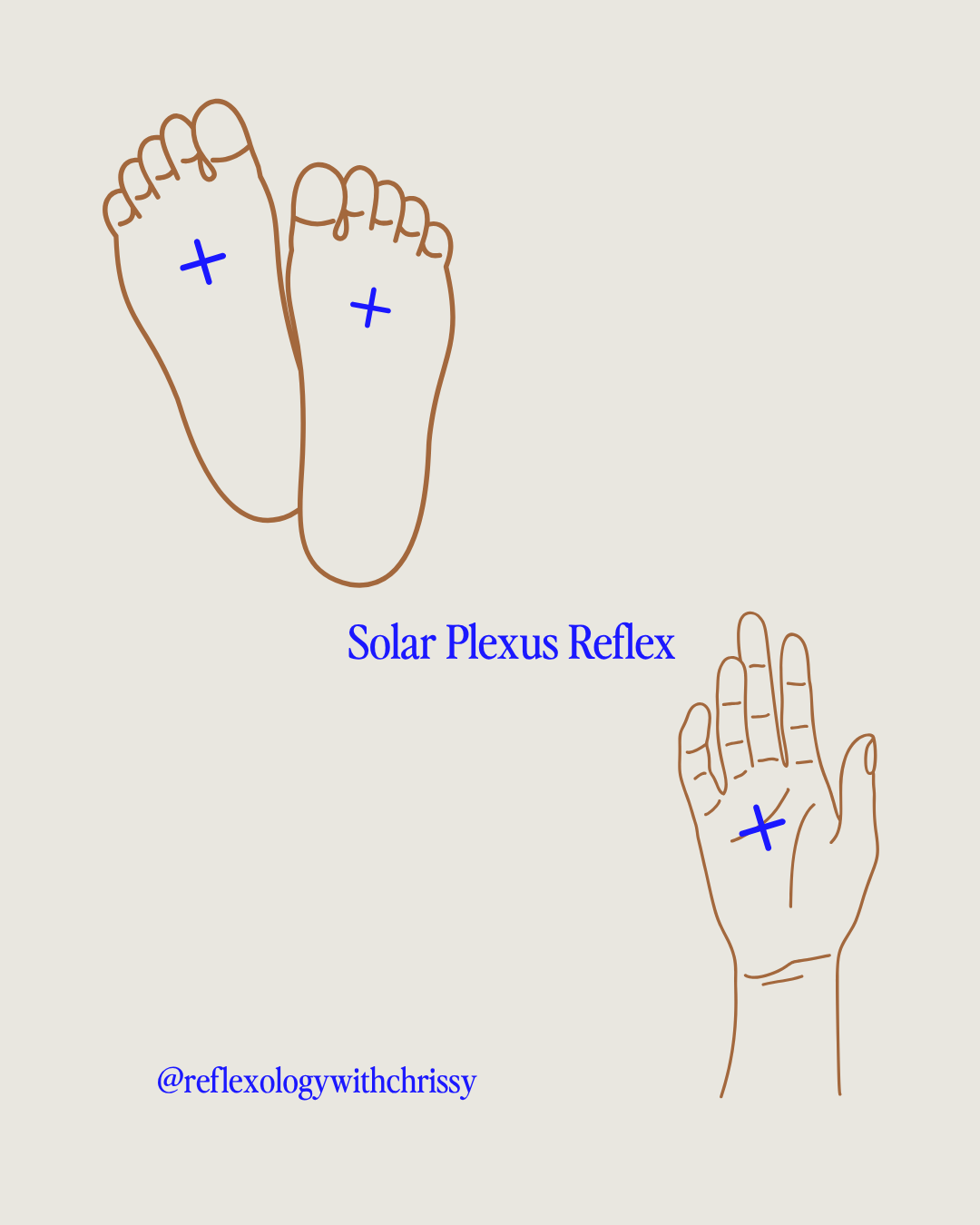
Where: On the sole of each foot, in the centre, just below the ball of the foot. On the hand, in the centre of the palm. Press gently and you'll often feel a slight dip or hollow.Keep the hand soft, not too outstretched - same for feet. It might feel stuck, uncomfortable even a bit ‘icky’.
What it does: The solar plexus is sometimes called the abdominal brain - it's a dense cluster of nerves that includes branches of the vagus, sitting just behind your stomach. The reflex point is one of the most powerful calming points in the entire body. Pressing it sends an almost immediate signal to soften the diaphragm, slow the breath, and shift you out of fight-or-flight.
How to use it: Press your thumb into the centre of the foot or palm. Hold for a slow count of five while you breathe out long and slow. Release. Repeat five times on each side. This is the point I teach clients first because the effect is so noticeable so quickly.
2. The diaphragm reflex
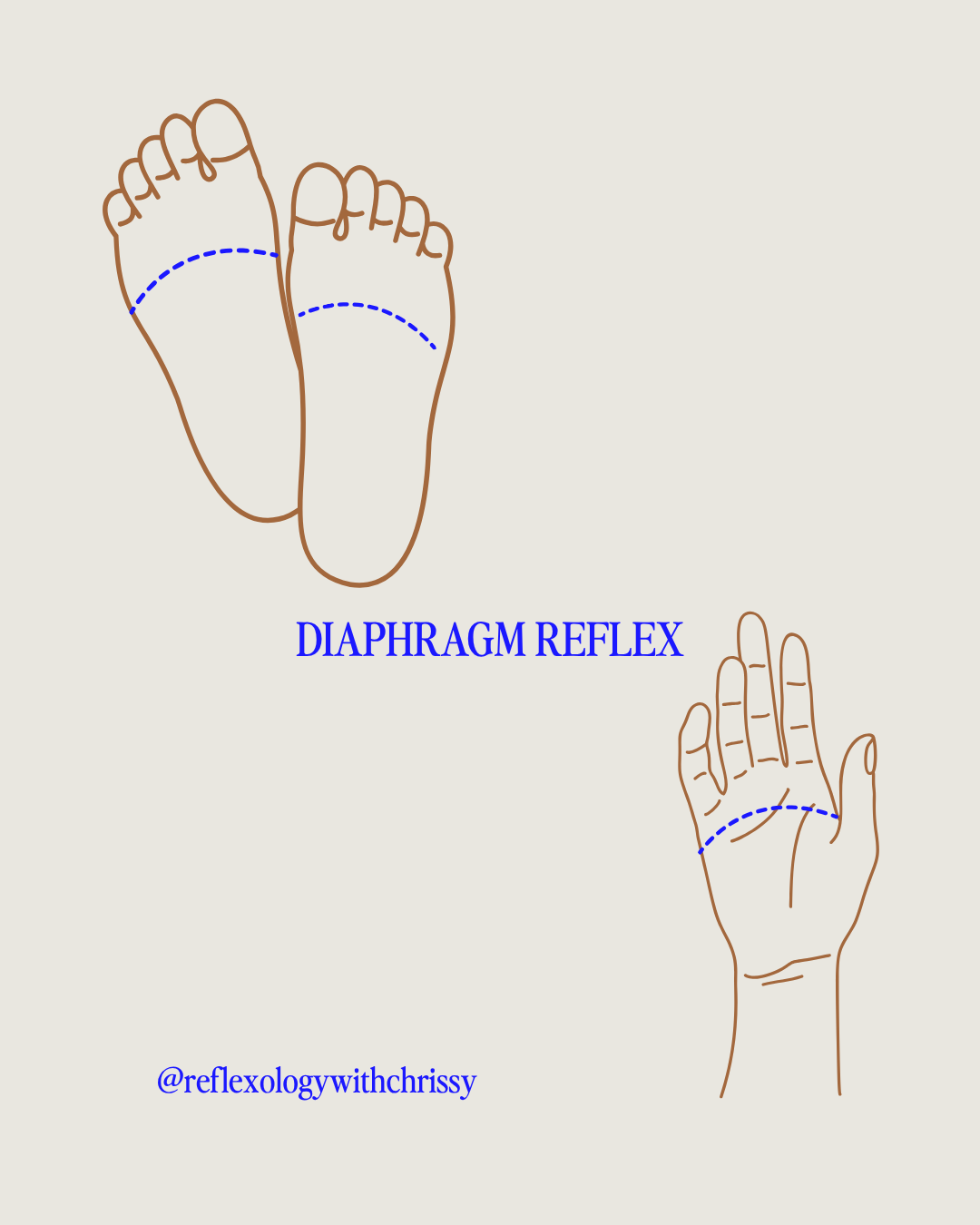
Where: Across the foot, running along the line where the ball of the foot meets the arch. On the hand, the same line - just below the base of the fingers, running across the palm.
What it does: The diaphragm is the muscle the vagus nerve uses to regulate your breath. A tight diaphragm means shallow chest breathing, which keeps the nervous system in alert mode. Working this reflex helps the diaphragm release - and the vagus nerve picks up the signal almost instantly.
How to use it: Use your thumb to slowly crawl across the line, pressing firmly but not painfully. Imagine you're ironing out a tight string. Go from one side to the other, then back. Repeat three times on each foot or hand.
3. The cervical spine / neck reflex
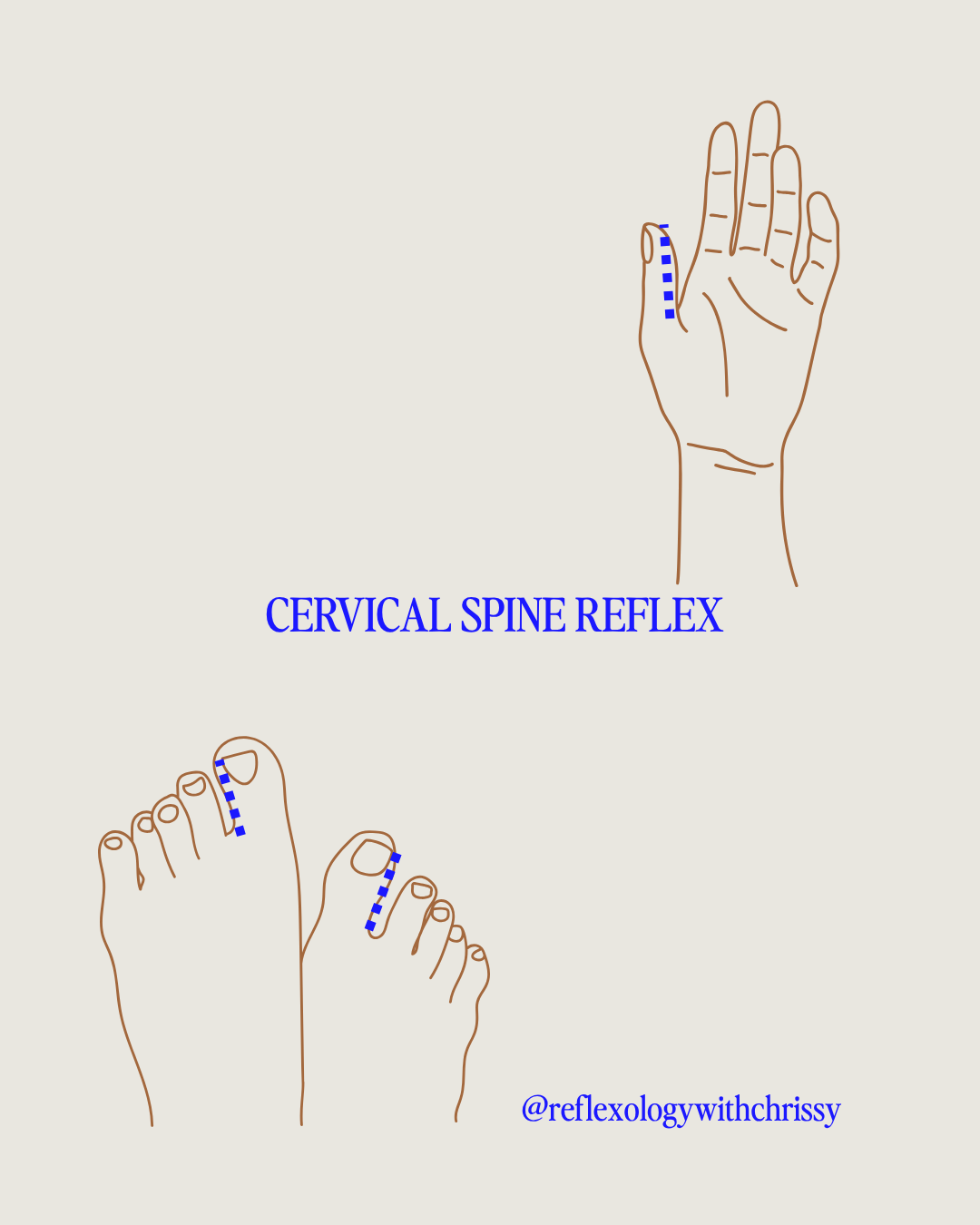
Where: Along the side of the big toe - specifically the side closest to the second toe — from base to tip. The same point exists along the inner side of the thumb.
What it does: The vagus nerve emerges from the base of the skull and travels down through the neck. This reflex maps the cervical spine, where vagal pathways run. Working it can release tension at the top of the spine and improve vagal tone directly.
How to use it: Pinch the side of the big toe between your thumb and index finger. Walk your thumb up the side of the toe from base to tip, applying gentle pressure. Repeat three times each side. This one often releases jaw tension as a bonus.
4. The adrenal reflex
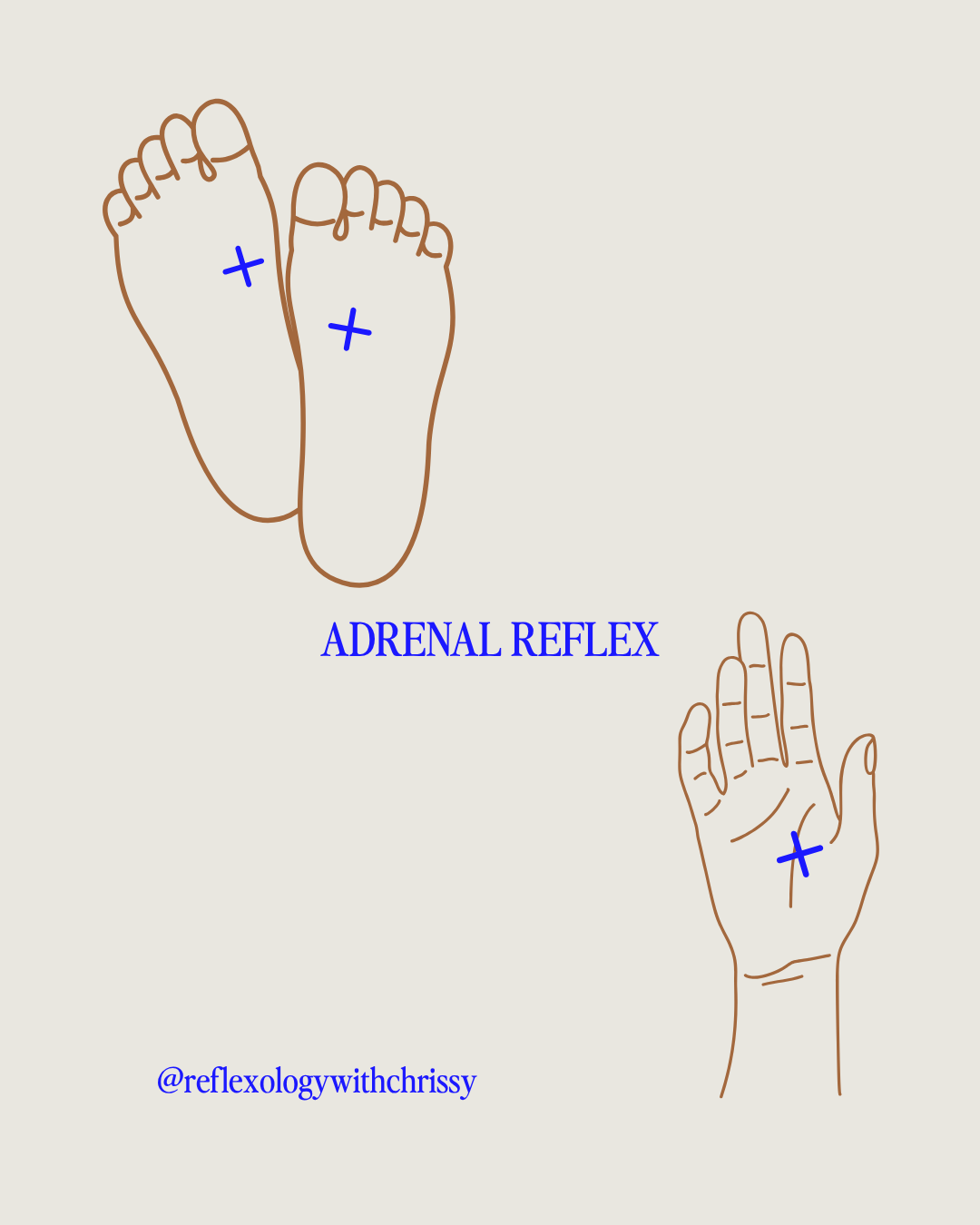
Where: On the sole of the foot, about a third of the way down from the base of the toes, slightly toward the inside edge — roughly where the ball of the foot meets the arch, on the inner side. On the hand, in the fleshy mound below the thumb.
What it does: The adrenals are where your body produces cortisol and adrenaline. After years of low-grade stress, the adrenal reflex tends to be the most reactive point on the entire foot — clients often flinch the moment I touch it. Working it helps signal to the nervous system that the alarm can be turned down.
How to use it: Press with your thumb, hold for five seconds while breathing slowly, release. If it feels tender or busy, that's normal — work it for longer with gentle, steady pressure rather than digging harder. Three to five rounds on each side.
A simple five-minute vagus nerve reset
If you want a starting point, here's the five-minute vagus nerve reset I give clients to use between sessions.
Sit somewhere comfortable, feet flat on the floor or kicked up on a cushion. Phone away.
Solar plexus — five slow holds, both feet (or both palms if you'd rather work your hands)
Diaphragm line — walk across, three times each side
Cervical spine — walk up the side of each big toe, three times
Adrenal point — five gentle holds each side
Finish by cupping your foot (or hand) in both palms for a minute. Just hold. Breathe.
Total time: under five minutes. Best done in the evening, or any time you notice yourself wired and unable to switch off.
Foot or hand - does it matter?
This is the question I get asked most. The honest answer: foot reflexology tends to be more powerful because the foot has more reflex points concentrated in a smaller area, and there's something about the act of having your feet held that signals safety in a way few other things do. If you've ever fallen asleep mid-treatment, you'll know what I mean.
But hand reflexology has one big advantage: you can do it anywhere. At your desk. In the car park before a meeting. In bed at 3am when you've woken up wired. It travels with you. For nervous-system regulation between treatments, hand reflexology is often the more practical tool.
What to expect - and what not to.
Worked well and consistently, these points can produce noticeable shifts in nervous-system regulation. Clients often report:
A deep yawn or sigh partway through (a classic vagal release)
Tummy gurgling - digestion waking up
A sudden feeling of heaviness in the limbs
Tears that arrive without an obvious reason
A few hours afterwards, sleep that comes more easily
What this isn't: a one-and-done fix. The nervous system learns through repetition. Five minutes once a week won't move the dial much. Five minutes a day, for three or four weeks, often does.
And if your nervous system has been running on alert for years - through perimenopause, chronic stress, hypermobility, or just life - you may find DIY-treatment helps but plateaus. That's where working with a practitioner makes a real difference. Hand reflexology you can do yourself opens the door. A full reflexology session walks you through it.
Frequently asked questions
Where is the vagus nerve pressure point on the foot? There isn't one single spot - the reflexes that calm the vagus and the nervous system sit across a few places on the sole. The main one is the solar plexus reflex, in the centre of the sole just below the ball of the foot. The diaphragm line, the cervical spine reflex (along the side of the big toe) and the adrenal reflex all support it. There's a full how-to for each one above.
Where is the vagus nerve pressure point on the hand? The same reflexes map onto the hand. The solar plexus "pressure point" sits in the centre of your palm; the diaphragm line runs across the palm just below the fingers; the cervical spine reflex follows the inner side of the thumb; and the adrenal reflex is in the fleshy mound below the thumb. The hand points are the practical ones - you can use them at your desk, in the car, or in bed at 3am.
How do I reset my vagus nerve at home? The five-minute routine above is a simple vagus nerve reset you can do most evenings: solar plexus holds, the diaphragm line, the cervical spine reflex and the adrenal point, finishing by cupping the foot or hand and breathing. Done little and often - five minutes a day for a few weeks - it shifts the dial far more than one long session now and then.
Can reflexology really stimulate the vagus nerve? Not directly - the vagus runs through your torso, not your feet or hands. What reflexology works on are reflex points that map onto the nervous system and the organs the vagus supplies, helping your body settle into its rest-and-digest state. Think of it as support for your nervous system, alongside the rest of your care - never a replacement for medical advice.
When DIY reflexology isn't enough
If any of this resonates and you suspect your nervous system needs more than five minutes a day can offer, the Foundation Series for Stress & Anxiety is six weekly reflexology sessions designed for exactly this — for women whose nervous systems have been running on alert for too long. Available at the Cheltenham and Bourton-on-the-Water clinics.
And for the deeper read on why the vagus nerve goes haywire in perimenopause - and what's actually happening in your body when anxiety, palpitations and sleep problems appear out of nowhere in your 40s - I've written the full story over here: The Vagus Nerve and Perimenopause: Why Your Nervous System Feels Broken.
Your vagus nerve has been asking for your attention. This is what listening looks like.
PS: Not local to Cheltenham? Sign up to The Off Switch - 5 days of free DIY foot reflexology recordings you can do yourself at home.